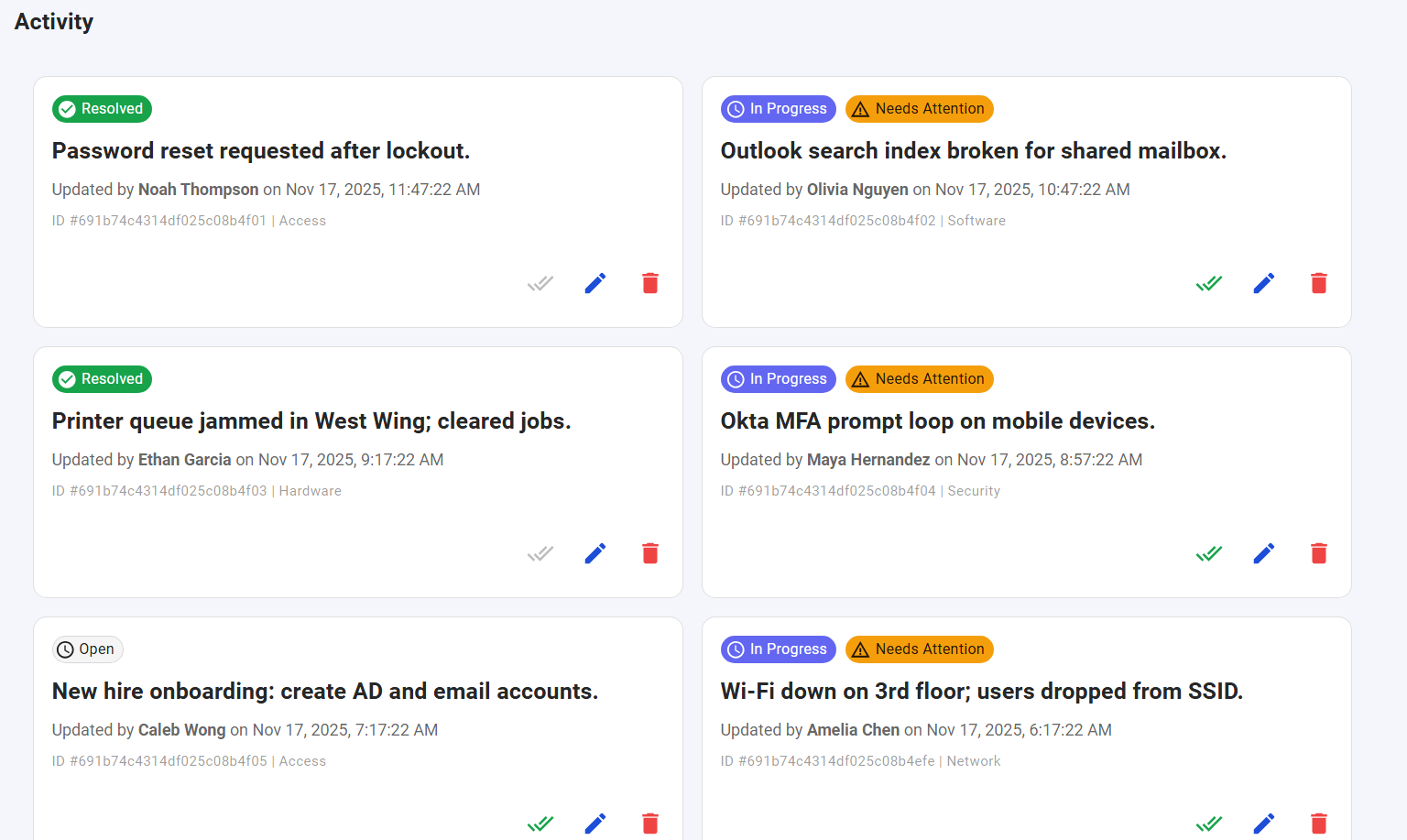
Quick Insights:
- Problem: An internal IT department managed incidents through ad hoc emails and spreadsheets, making it hard to see current workload, ownership and which tickets needed urgent attention.
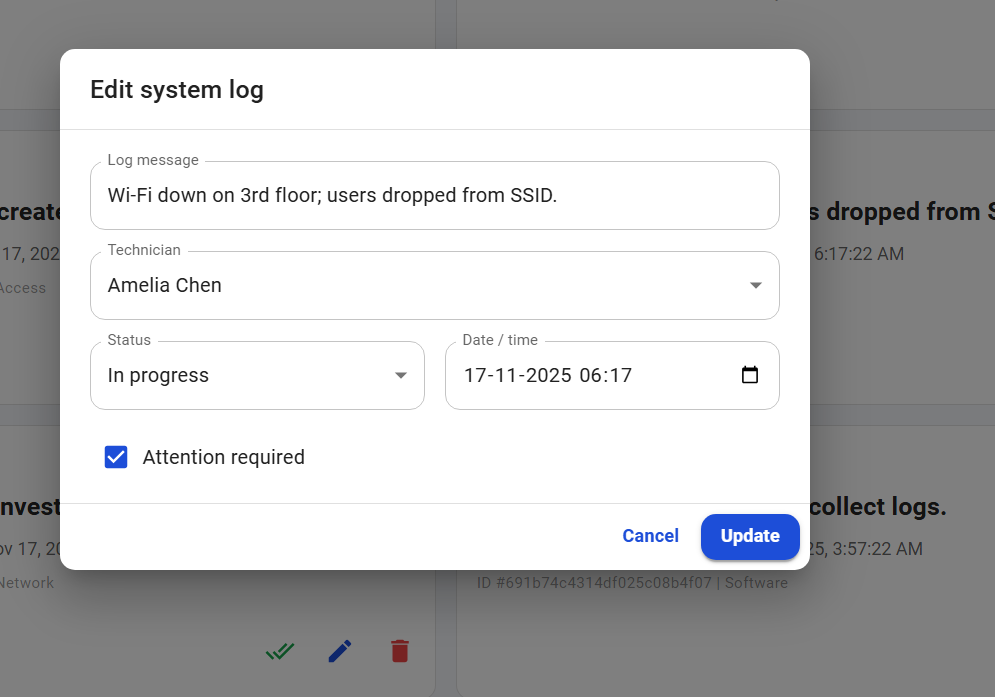
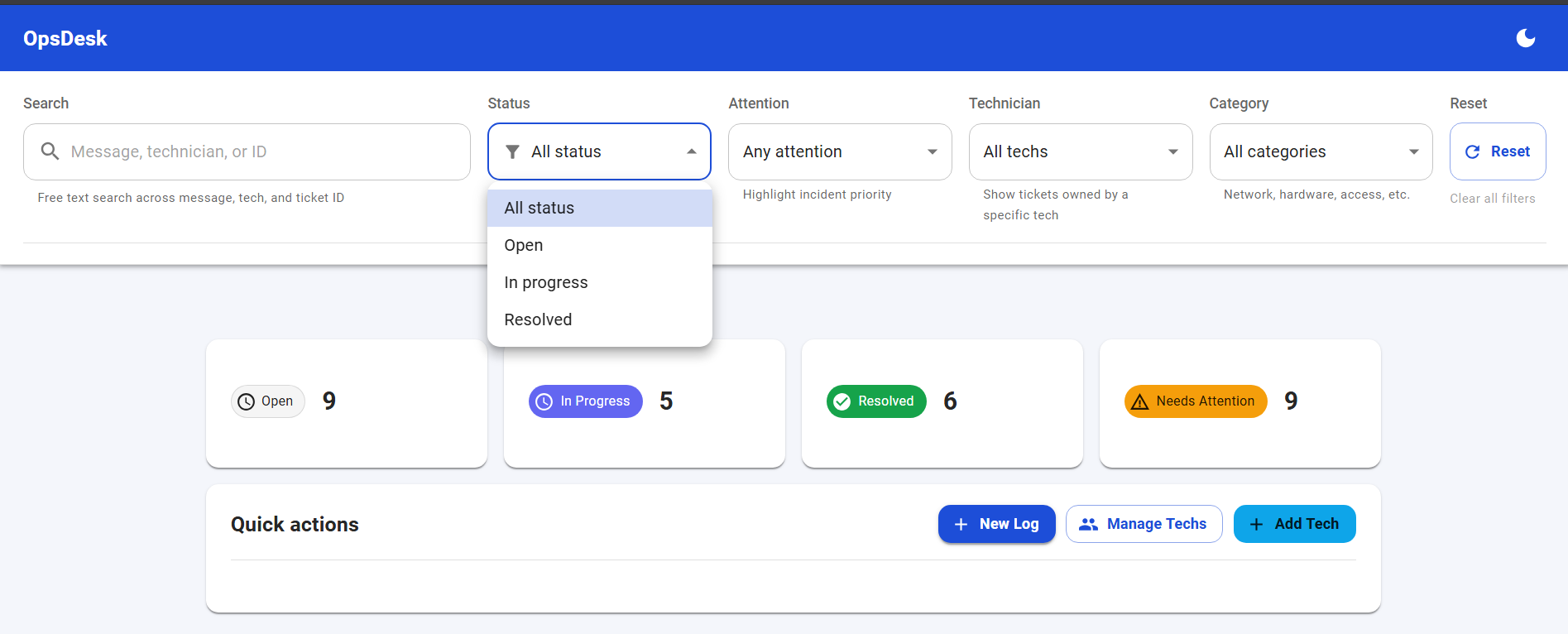
- Solution: Built OpsDesk as a single page React application backed by a Node and MongoDB API, providing a live dashboard with filters, attention flags, technician assignment, light and dark themes and full CRUD for system logs.
- Result: Delivered a production ready tool as part of a freelancing engagement, containerized with Docker and deployed on an AWS EC2 instance so the client team could log, search and update tickets from one place instead of juggling multiple tools, saving 5 hours per week on average.
Introduction
OpsDesk is a custom internal application built for an IT department client during a freelancing engagement. The goal was to replace email and spreadsheet based logging with a focused dashboard that gives technicians a clear view of current incidents and who owns what. The system supports everyday helpdesk tasks such as password resets, network issues and hardware problems.
The frontend is implemented in React using a component based architecture and Context API to manage global state such as filters, theme and technician data without prop drilling. A Node.js backend exposes REST endpoints that read and write to MongoDB. MongoDB was chosen because log entries and technician records are naturally document shaped, may evolve over time with new fields and are easy to query by status, category or technician.
The application is packaged into Docker containers and deployed on an AWS EC2 instance, making it simple for the client to run the system in their environment and restart or update it with minimal downtime. The design emphasizes quick scanning for busy technicians with clear status chips, attention flags and minimal friction for creating or editing a log.
- Replaced manual email and spreadsheet workflows, saving technicians an average of 5 hours per week by centralizing logs, ownership and updates into a single interface.
- Context API centralizes filters, theme and technician data so updates appear immediately across the interface.
- MongoDB collections store logs and technicians as flexible JSON documents, supporting new categories and flags without schema migrations.
- Docker on AWS EC2 provides a simple deployable unit the client can run and restart in their own infrastructure.
Demonstration
Key Outcomes and Learnings
OpsDesk brought together full stack development, deployment and UX decisions into a single deliverable for a real client. It required balancing implementation speed with a design that technicians could understand at a glance and adopt without formal training.
- Reduced operational friction by cutting the number of steps needed to resolve a ticket from an average of 7–8 interactions down to 3, thanks to unified filters, streamlined editing and centralized technician data.
- Gained experience designing REST endpoints and data models so logs, technicians and categories remain easy to query and extend.
- Containerized the application with Docker and deployed it to AWS EC2, gaining practical experience with environment configuration and runtime management.
- Focused on operator experience by adding clear status and attention indicators, quick actions and sortable, newest first activity feeds.
- Delivered a production ready tool for an IT department client, improving visibility into current incidents and technician workload.